

Three-in-One Conveyor-Type Dehumidifying Dryer
隐藏域元素占位
Category:
Keywords
- Product Description
- Specifications
-
- Commodity name: Three-in-One Conveyor-Type Dehumidifying Dryer
Integrates dehumidification, drying, and two-stage material feeding into a single unit. The dehumidification section is equipped with a desiccant wheel, delivering stable low-dew-point air with a dew point as low as below –40°C. The stainless-steel double-walled insulated drying hopper features a bottom-blowing air duct design, ensuring uniform drying of the raw material while effectively preventing heat loss. The feeding system is fitted with a cut-off valve to ensure no residual material remains in the feed pipe. The closed-loop feeding system prevents contamination and reabsorption of moisture by the material. Optical-grade models are paired with a boiling-type photoelectric sensor hopper, which removes fine powder from the raw material, thereby avoiding defect formation during the molding of optical-grade products. The optical-grade model’s internal system is equipped with a high-efficiency filter that effectively captures particulate matter as small as 0.3 μm, achieving a filtration efficiency of 99.995%. Optional PLC control with an LCD touch-screen HMI is available, enabling centralized and convenient operation and full machine automation. A dew-point monitoring device can also be optionally purchased.
Integrates dehumidification, drying, and two-stage feeding into a single unit.
The dehumidification section is equipped with a desiccant wheel, which delivers stable low-dew-point air with a dew point as low as below -40°C.
The stainless steel double-layer insulated drying hopper features a bottom-blowing air duct design, ensuring uniform drying of the raw material while effectively minimizing heat loss.
The feeding system is equipped with a cut-off valve to ensure that no residual material remains in the feed tube.
A closed-loop feeding system can prevent raw materials from contamination or reabsorption of moisture.
Optical-grade models are equipped with a boiling-type photoelectric hopper, which effectively removes fine powders from the raw materials, thereby preventing the formation of blemishes during the molding of optical-grade products.
The optical model is equipped with a high-efficiency filter inside the system, which can effectively remove fine particulate ions as small as 0.3 μm, achieving a filtration efficiency of 99.995%.
Optional PLC control with an LCD touch-screen HMI is available, enabling centralized and convenient operation and full machine automation.
A dew-point detection device is available as an optional accessory.Model KS25 KS50 KS50W KS75 KS100 KS100W KS150 KS150W KS200 KS200W KS300 KS400 KS500 KS600 Drying System Thermal Insulated Bucket Capacity (kg) 25 50 50 75 100 100 150 150 200 200 300 400 500 600 Dry electric heating power (kW) 2.4 2.4 4 4 4 7.2 7.2 9 9 12 15 15 18 18 Dryer fan power (kW) 0.4 0.4 0.75 0.75 0.75 1.1 1.1 1.5 1.5 2.2 2.2 4 5.5 7.5 Dehumidification System Dehumidification air volume (m³/hr) 60 60 90 90 90 120 120 150 150 200 200 300 400 500 Regenerative Electric Heating Power (kW) 2.4 2.4 2.4 2.4 2.4 2.4 2.4 2.4 2.4 4 4 7.2 7.2 7.2 Regenerative Fan Power (kW) 0.2 0.2 0.2 0.2 0.2 0.2 0.2 0.2 0.2 0.4 0.4 0.4 0.75 0.75 Feeding System Feed fan power (kW) 1.1 1.1 1.1 1.1 1.1 1.1 1.1 1.1 1.5 1.5 1.5 1.5 2.2 2.2 Material suction machine piping 1.5 1.5 1.5 1.5 1.5 1.5 1.5 1.5 1.5 1.5 1.5 1.5 1.5 1.5 Vacuum Hopper (L) 6 6 6 6 6 6 6 6 12 12 12 12 20 20 Electric Eye Hopper (L) 3 3 3 3 6 6 6 6 12 12 12 12 24 24 Appearance Height H (mm) 1530 1550 1650 1830 1830 1870 1870 1910 2180 2180 2300 2300 2700 2800 Width W (mm) 1050 1050 1050 1100 1250 1180 1290 1340 1490 1490 1500 1550 1750 1760 Depth D (mm) 850 850 850 870 970 960 960 1080 1100 1100 1100 1180 1320 1320 Weight (kg)
Weight250 280 300 320 385 442 449 475 530 560 615 635 760 850 Product specifications are subject to change without prior notice. Note: (1) When selecting a dew-point detection device, add “D” after the model number.
(2) When selecting a PLC control system paired with an LCD touch-screen HMI, add the letter “P” to the end of the model designation.
(3) The machine’s voltage specifications are: 3φ, 380 VAC, 50 Hz.
Previous Page
Next Page
Product Details
Integrates dehumidification, drying, and two-stage feeding into a single unit.
The dehumidification section is equipped with a desiccant wheel, which delivers stable low-dew-point air with a dew point as low as below -40°C.
The stainless steel double-layer insulated drying hopper features a bottom-blowing air duct design, ensuring uniform drying of the raw material while effectively minimizing heat loss.
The feeding system is equipped with a cut-off valve to ensure that no residual material remains in the feed tube.
A closed-loop feeding system can prevent raw materials from contamination or reabsorption of moisture.
Optical-grade models are equipped with a boiling-type photoelectric hopper, which effectively removes fine powders from the raw materials, thereby preventing the formation of blemishes during the molding of optical-grade products.
The optical model is equipped with a high-efficiency filter inside the system, which can effectively remove fine particulate ions as small as 0.3 μm, achieving a filtration efficiency of 99.995%.
Optional PLC control with an LCD touch-screen HMI is available, enabling centralized and convenient operation and full machine automation.
A dew-point detection device is available as an optional accessory.
| Model | KS25 | KS50 | KS50W | KS75 | KS100 | KS100W | KS150 | KS150W | KS200 | KS200W | KS300 | KS400 | KS500 | KS600 | |
| Drying System | Thermal Insulated Bucket Capacity (kg) | 25 | 50 | 50 | 75 | 100 | 100 | 150 | 150 | 200 | 200 | 300 | 400 | 500 | 600 |
| Dry electric heating power (kW) | 2.4 | 2.4 | 4 | 4 | 4 | 7.2 | 7.2 | 9 | 9 | 12 | 15 | 15 | 18 | 18 | |
| Dryer fan power (kW) | 0.4 | 0.4 | 0.75 | 0.75 | 0.75 | 1.1 | 1.1 | 1.5 | 1.5 | 2.2 | 2.2 | 4 | 5.5 | 7.5 | |
| Dehumidification System | Dehumidification air volume (m³/hr) | 60 | 60 | 90 | 90 | 90 | 120 | 120 | 150 | 150 | 200 | 200 | 300 | 400 | 500 |
| Regenerative Electric Heating Power (kW) | 2.4 | 2.4 | 2.4 | 2.4 | 2.4 | 2.4 | 2.4 | 2.4 | 2.4 | 4 | 4 | 7.2 | 7.2 | 7.2 | |
| Regenerative Fan Power (kW) | 0.2 | 0.2 | 0.2 | 0.2 | 0.2 | 0.2 | 0.2 | 0.2 | 0.2 | 0.4 | 0.4 | 0.4 | 0.75 | 0.75 | |
| Feeding System | Feed fan power (kW) | 1.1 | 1.1 | 1.1 | 1.1 | 1.1 | 1.1 | 1.1 | 1.1 | 1.5 | 1.5 | 1.5 | 1.5 | 2.2 | 2.2 |
| Material suction machine piping | 1.5 | 1.5 | 1.5 | 1.5 | 1.5 | 1.5 | 1.5 | 1.5 | 1.5 | 1.5 | 1.5 | 1.5 | 1.5 | 1.5 | |
| Vacuum Hopper (L) | 6 | 6 | 6 | 6 | 6 | 6 | 6 | 6 | 12 | 12 | 12 | 12 | 20 | 20 | |
| Electric Eye Hopper (L) | 3 | 3 | 3 | 3 | 6 | 6 | 6 | 6 | 12 | 12 | 12 | 12 | 24 | 24 | |
| Appearance | Height H (mm) | 1530 | 1550 | 1650 | 1830 | 1830 | 1870 | 1870 | 1910 | 2180 | 2180 | 2300 | 2300 | 2700 | 2800 |
| Width W (mm) | 1050 | 1050 | 1050 | 1100 | 1250 | 1180 | 1290 | 1340 | 1490 | 1490 | 1500 | 1550 | 1750 | 1760 | |
| Depth D (mm) | 850 | 850 | 850 | 870 | 970 | 960 | 960 | 1080 | 1100 | 1100 | 1100 | 1180 | 1320 | 1320 | |
| Weight (kg) Weight |
250 | 280 | 300 | 320 | 385 | 442 | 449 | 475 | 530 | 560 | 615 | 635 | 760 | 850 | |
| Product specifications are subject to change without prior notice. | |||||||||||||||
| Note: (1) When selecting a dew-point detection device, add “D” after the model number. (2) When selecting a PLC control system paired with an LCD touch-screen HMI, add the letter “P” to the end of the model designation. (3) The machine’s voltage specifications are: 3φ, 380 VAC, 50 Hz. |
|||||||||||||||
- Strong safety performance: Provide multiple anti-theft designs to ensure the safety of home and property.
- High durability: Made of high-quality materials, corrosion-resistant and wear-resistant, with a long service life.
- Appearance diversity: Rich design styles, perfect match with various decorations.
- Easy operation: Intelligent design, no key required, simple and efficient to use.
- Multifunctionality: With alarm prompts and networking functions, it meets the needs of multiple scenarios.
- Easy installation: Compatible with a variety of door types, quick installation, and strong adaptability.
Certificate
FAQ
Q
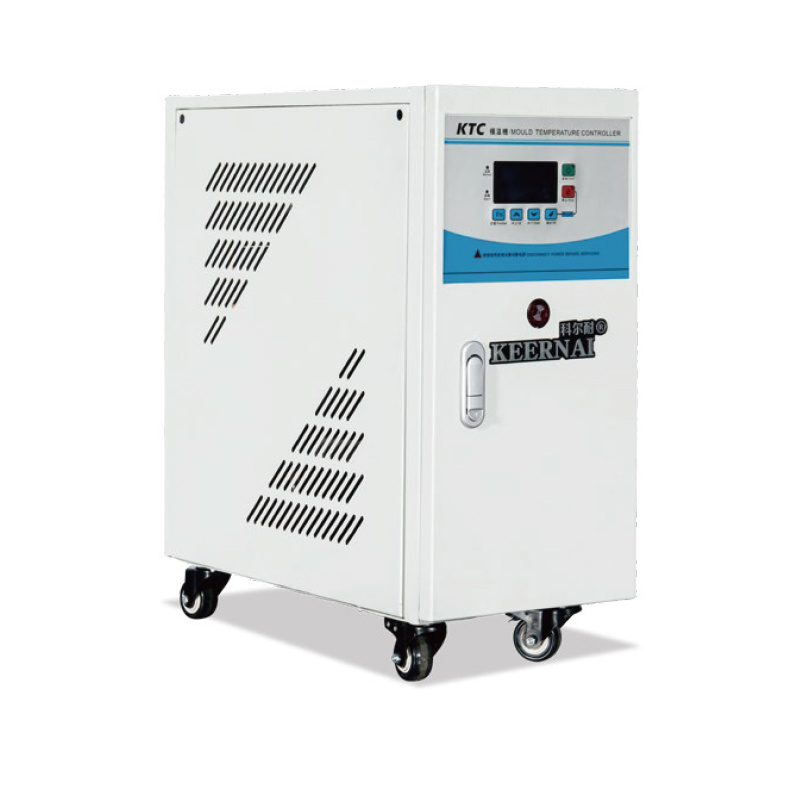
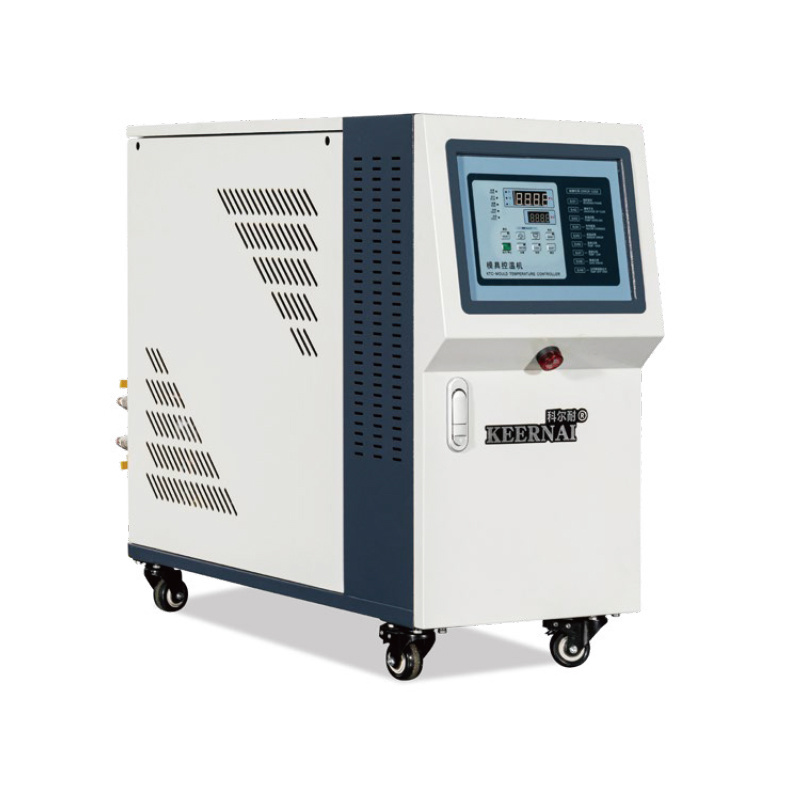
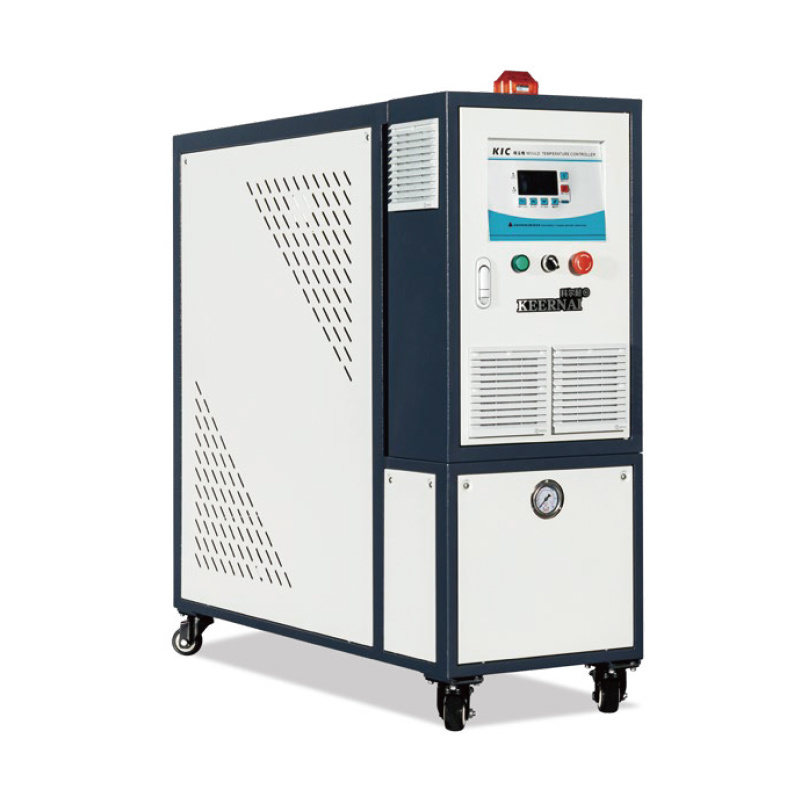
What are the common reasons for the mold temperature controller alarming and shutting down?
A
Common reasons include high-temperature protection, low liquid level alarm, overload protection, heating element failure, or pump malfunction.
Q
Why is the cooling performance of the chiller poor?
A
Possible causes include insufficient refrigerant, blocked condenser, compressor failure, or pipeline leakage. Inspections and repairs are needed.
Q
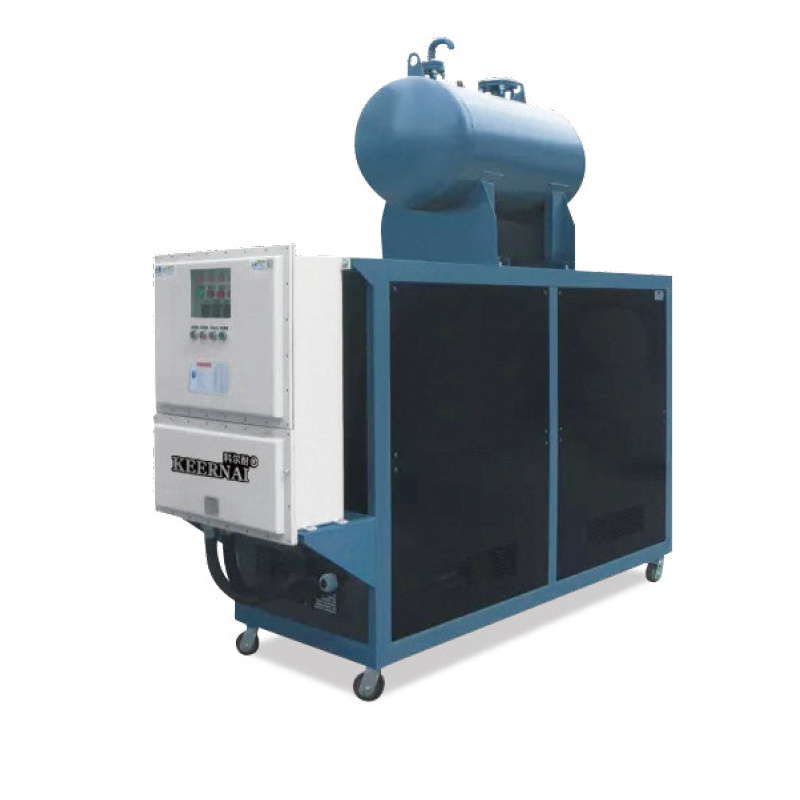
What is the working principle of a mold temperature controller (MTC)?
A
The MTC heats or cools the medium (such as water or thermal oil) to a set temperature and then circulates it through the mold or equipment via a pump to achieve precise temperature control.
Q
Why is the mold temperature controller heating up slowly?
A
Possible reasons include insufficient heating power, pump failure, pipeline blockage, or insufficient medium. These should be checked and resolved step by step.
Q
What is the difference between a mold temperature controller and a chiller?
A
The MTC is used for heating and maintaining the temperature of equipment or molds, while the chiller is mainly used for quickly cooling equipment or molds to lower the temperature.

FOCUS ON TEMPERATURE CONTROL TECHNOLOGY
Contact
Fax: 86-750-3609612
Add: No. 38, Yecheng Industrial Zone, Kautou Star Village, Jianghai District, Jiangmen, Guangdong, China
Sign up for exclusive offers and updates!
Connnect with us!


