

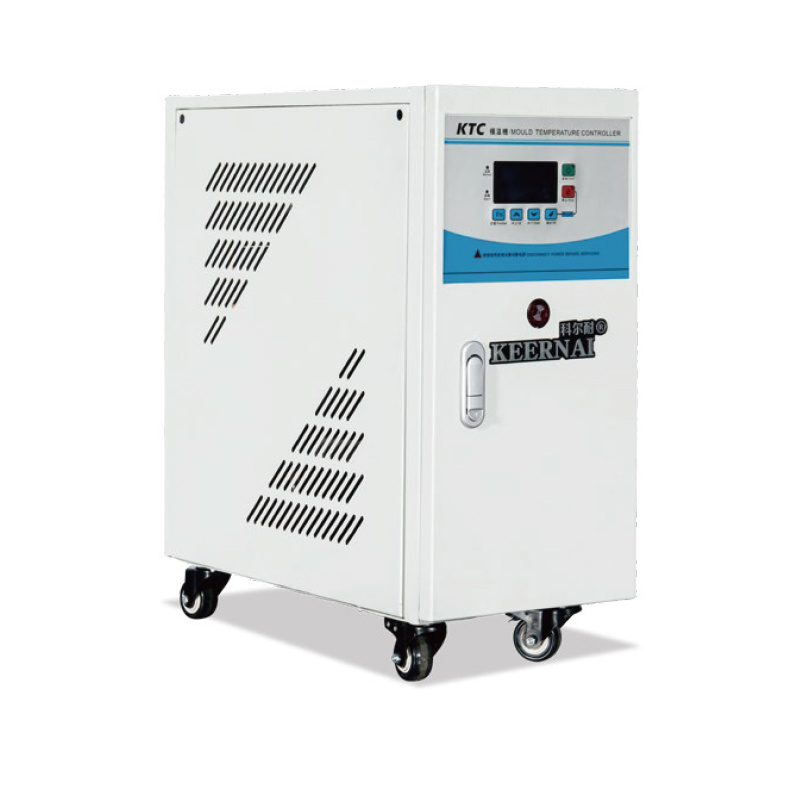
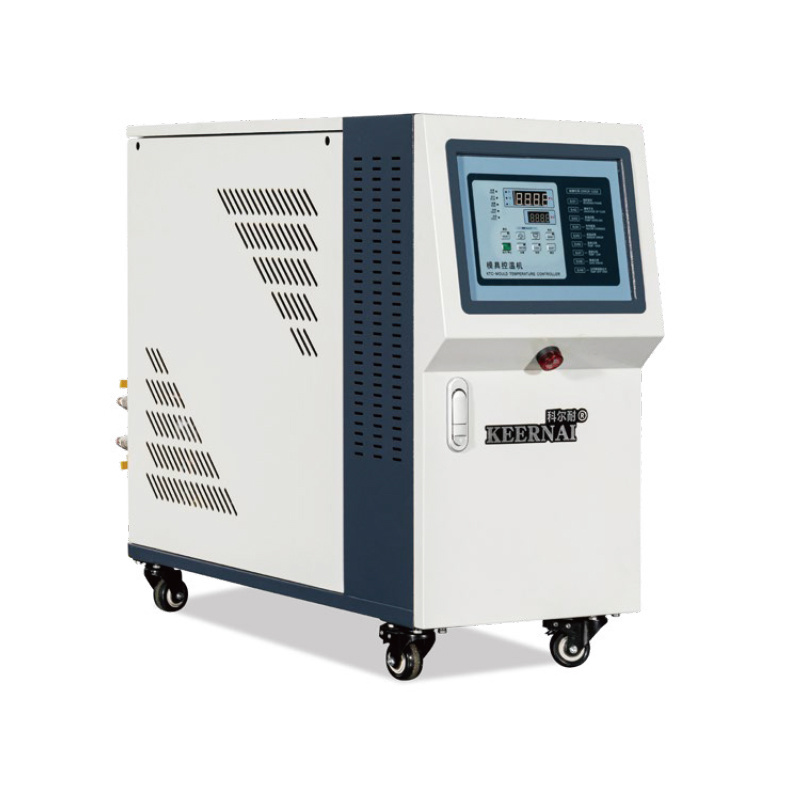
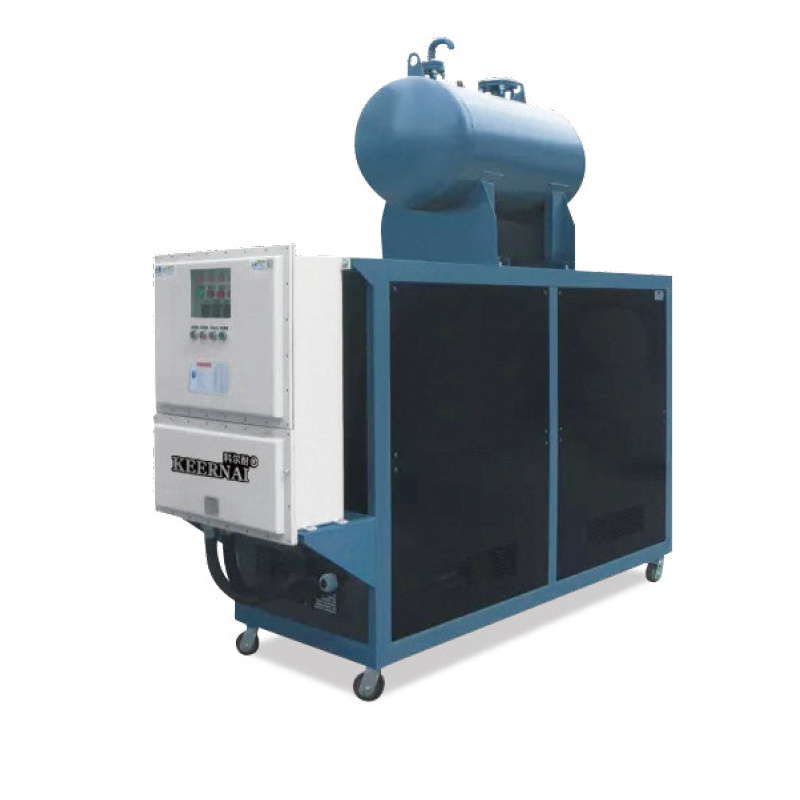
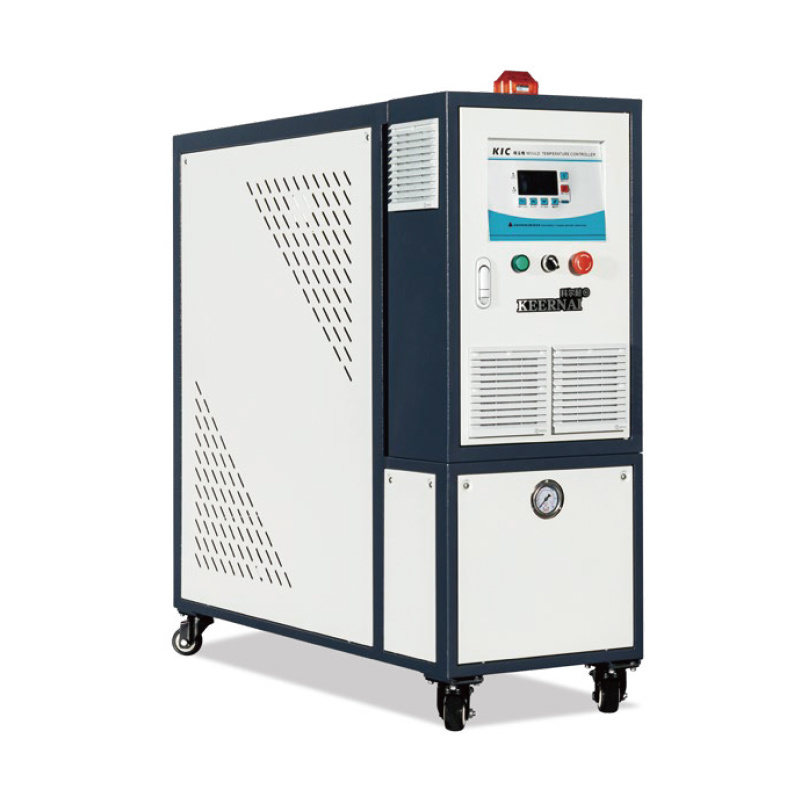
Rubber mold temperature controller
隐藏域元素占位
Category:
Keywords
- Product Description
- Specifications
-
- Commodity name: Rubber mold temperature controller
◆Explosion-proof device (optional) ◆Return water temperature display (optional) ◆Forced cooling function (optional) ◆High-capacity cooling performance ◆Automatic air venting upon power-up ◆Heating power switching function ◆RS485 communication interface for automated management (optional) ◆Instant cooling upon power-up (optional) ◆Hot water BY-PASS pressure-relief circuit ◆Carbon-black-resistant, isolated electrical control cabinet (optional) ◆Multi-point temperature control units available for custom order ◆Can be configured for direct cooling or (optional) indirect cooling ◆Electrical components from SIMMENS, Weidmuller, LS, JUMO, ABB, and WEST (optional) ◆Temperature control range: inlet water temperature +25°C to 98°C ◆All-stainless-steel integrated piping system to minimize flow resistance and scale buildup ◆Control method: imported microcomputer control or (optional) PLC control ◆Comprehensive safety protection with fault indication; maintenance and servicing can be performed without specialized personnel
-
◆Explosion-proof device (optional)
◆Return Water Temperature Display (Optional)
◆ Forced Cooling Function (Optional)
◆High-intensity cooling capability
◆ Automatic air venting upon power-up
◆ Heating Power Switching Function
◆ RS485 communication function for automated management (optional)
◆ Instant Cooling Power-On Function (Optional)
◆Hot Water BY-PASS Pressure-Relief Circuit
◆ Carbon-black-resistant, isolated electrical control box (optional)
◆ Multi-point temperature control units are available for custom order.
◆ Direct cooling or (optional) indirect cooling is available.
◆Electrical components are sourced from SIMMENS, Weidmuller, LS, JUMO, ABB, and WEST (optional).
◆ Temperature control range: Inlet water temperature +25℃ to -98℃
◆ Integrated stainless steel piping to reduce flow resistance and rust buildup.
◆Control Method: Employs an imported microcomputer or (optional) PLC control.
◆ Comprehensive safety protection, fault display, and no need for professional personnel for repair and maintenance.Project Unit KTC-36XJ KTC-48XJ KTC-60XJ KTC-72XJ Temperature control range degrees Celsius Inlet water temperature: +25℃ to -98℃ Temperature control accuracy degrees Celsius PID ±1℃ Power supply AC 3-phase 380 V 50 Hz (3-phase + Earth); AC 3-phase 440 V 60 Hz; AC 3-phase 460 V 60 Hz Heat transfer medium Clear water Cooling method Direct cooling (indirect cooling available upon request) Heating capacity Keyword 36 48 60 72 Pump horsepower hp 3 4 5 6 Pump flow L/min 140 300 367 400 Pump pressure kg/cm² 4 3 3 4 Maximum Power Consumption Keyword 39 52 65 78 Alarm Function Phase loss / Water shortage / Overtemperature / Overload Cooling water piping inch 1/2 1/2 1/2 1/2 Recirculating Water Piping inch Three-fourths 1 1.25 1.5 Overall reference dimensions mm 1220×400×1160 1220×400×1160 1600×500×1360 1600×500×1360 The above specifications are subject to change without prior notice; custom designs and modifications can be provided for special requirements.
Product Details
- Strong safety performance: Provide multiple anti-theft designs to ensure the safety of home and property.
- High durability: Made of high-quality materials, corrosion-resistant and wear-resistant, with a long service life.
- Appearance diversity: Rich design styles, perfect match with various decorations.
- Easy operation: Intelligent design, no key required, simple and efficient to use.
- Multifunctionality: With alarm prompts and networking functions, it meets the needs of multiple scenarios.
- Easy installation: Compatible with a variety of door types, quick installation, and strong adaptability.
Certificate
FAQ
Q
What are the common reasons for the mold temperature controller alarming and shutting down?
A
Common reasons include high-temperature protection, low liquid level alarm, overload protection, heating element failure, or pump malfunction.
Q
Why is the cooling performance of the chiller poor?
A
Possible causes include insufficient refrigerant, blocked condenser, compressor failure, or pipeline leakage. Inspections and repairs are needed.
Q
What is the working principle of a mold temperature controller (MTC)?
A
The MTC heats or cools the medium (such as water or thermal oil) to a set temperature and then circulates it through the mold or equipment via a pump to achieve precise temperature control.
Q
Why is the mold temperature controller heating up slowly?
A
Possible reasons include insufficient heating power, pump failure, pipeline blockage, or insufficient medium. These should be checked and resolved step by step.
Q
What is the difference between a mold temperature controller and a chiller?
A
The MTC is used for heating and maintaining the temperature of equipment or molds, while the chiller is mainly used for quickly cooling equipment or molds to lower the temperature.

FOCUS ON TEMPERATURE CONTROL TECHNOLOGY
Contact
Fax: 86-750-3609612
Add: No. 38, Yecheng Industrial Zone, Kautou Star Village, Jianghai District, Jiangmen, Guangdong, China
Sign up for exclusive offers and updates!
Connnect with us!


